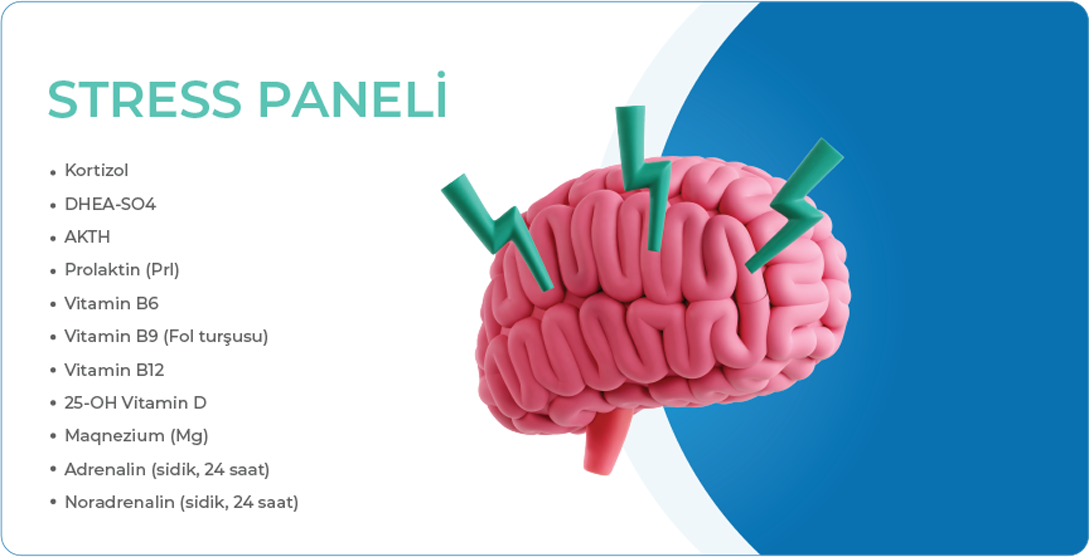
Stress Panel is a comprehensive diagnostic package designed to evaluate how the body responds to acute or chronic stress. Prolonged and unmanaged stress can lead to metabolic disorders, sleep disturbances, chronic fatigue, weakened immunity, depression, and even cardiovascular diseases.
A Stress Panel Should Be Given In These Cases:
- Persistent fatigue and weakness;
- Insomnia or early morning awakening;
- Anxiety, nervousness, or symptoms of panic attacks;
- Unexplained fluctuations in blood pressure;
- Concentration and memory difficulties;
- Decreased libido and menstrual irregularities.
Tests included in the check-up package:
- Cortisol: Cortisol is the primary stress hormone. It is normally high in the morning and low in the evening. Prolonged elevated levels may lead to insomnia, weight gain (obesity), and increased blood pressure. Low levels may be associated with adrenal insufficiency and depressive symptoms.
- DHEA-SO4: The cortisol/DHEA ratio helps evaluate the overall impact and intensity of stress on the body.
- ACTH (Adrenocorticotropic Hormone): ACTH reflects how cortisol (the stress hormone) is regulated by the pituitary gland.
- Prolactin: Prolactin is one of the hormones that can increase under stress. Elevated levels may be associated with menstrual irregularities, infertility, and reduced libido.
- Vitamin B6 (Pyridoxine): Vitamin B6 plays an important role in the synthesis of neurotransmitters and adrenal hormones.
- Low levels may be associated with stress, insomnia, and emotional instability.
- Vitamin B9 (Folic Acid): Folic acid is involved in the production of mood-regulating neurotransmitters such as serotonin and dopamine.
- Deficiency may contribute to depressive symptoms and difficulty with concentration.
- Vitamin B12 (Cobalamin): Vitamin B12 is essential for nerve cell protection and energy production. Low levels may cause irritability, memory impairment, and fatigue.
- 25-OH Vitamin D: Vitamin D is important not only for bone health but also for brain and nervous system function. Low vitamin D levels may increase cortisol (stress hormone) and contribute to mood changes. During chronic stress, vitamin D stores may be depleted more quickly, leading to fatigue, insomnia, and emotional fluctuations.
- Magnesium (Mg): Magnesium is a natural calming mineral essential for nerve impulse transmission and muscle relaxation.
- Adrenaline and Noradrenaline: High levels may cause irritability, sweating, palpitations, and panic attacks. Low levels may be associated with lack of motivation, low energy, and impaired stress adaptation.
Online registration is required for check-up examinations. You can contact us for more information via WhatsApp at (+994 55) 400 09 10 or through our call center at (012) 910.