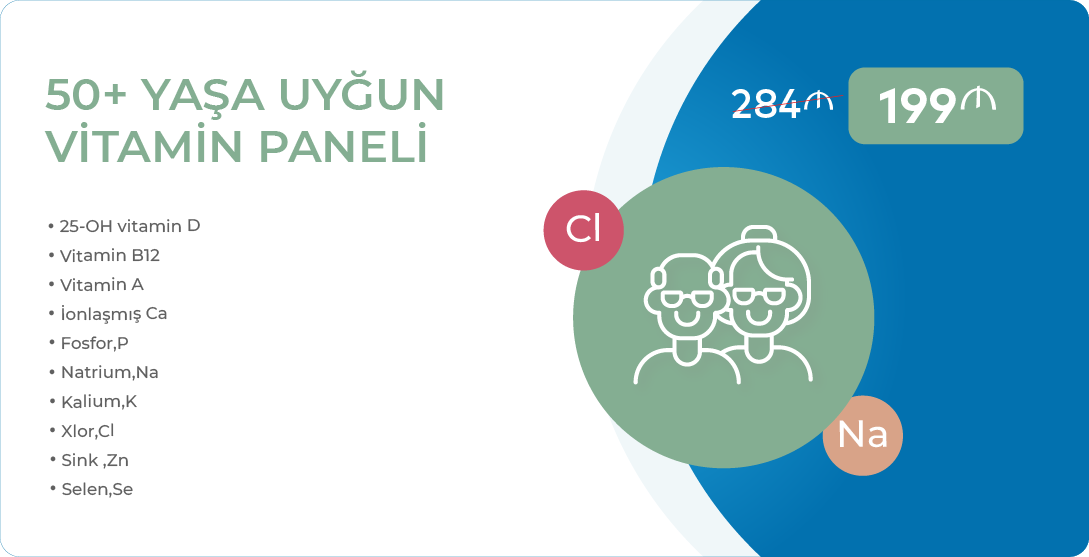
Why is this check-up package important?
After the age of 50, physiological and functional changes occur in the body-metabolism slows down, energy requirements change, and the levels of certain vitamins and minerals tend to decrease more rapidly.
During this period, changes in visual health also occur, with age-related vision problems such as macular degeneration becoming more common. On the other hand, disturbances in electrolyte balance can significantly affect heart function, the nervous system, and overall energy levels.
Check-up package includes:
- 25-OH Vitamin D
- Vitamin B12
- Vitamin A
- Ionized Calcium
- Phosphorus
- Sodium (Na)
- Potassium (K)
- Chloride (Cl)
- Zinc (Zn)
- Selenium (Se)
- 25-OH Vitamin D promotes the absorption of calcium and phosphorus, helping maintain bone strength, supporting muscle function, and contributing to immune system regulation. Deficiency may lead to osteoporosis, increased fracture risk, and muscle weakness.
- Vitamin B12 supports nervous system function, red blood cell production, and DNA synthesis. Its absorption tends to decrease with age. Deficiency may result in anemia, memory impairment, and neurological disorders.
- Vitamin A is involved in the synthesis of visual pigments, the maintenance of epithelial tissues, and immune function. Adequate intake of this vitamin plays a role in preventing age-related macular degeneration and night vision impairment.
- Ionized calcium balance may be disrupted by hormonal changes, especially after menopause, which can lead to a reduction in bone mass and an increased risk of bone loss.
- Phosphorus works together with calcium to form the structure of bones and teeth. It plays a key role in ATP synthesis, cellular energy regulation, and is an essential component of cell membranes.
- Sodium maintains fluid and electrolyte balance, regulates blood pressure, and supports the transmission of nerve impulses. Deficiency may negatively affect cardiovascular health; therefore, its levels should be monitored.
- Potassium is the primary intracellular cation and is essential for heart rhythm, muscle function, and blood pressure regulation. It plays an important role in managing the risk of hypertension and arrhythmias.
- Chloride helps maintain acid–base balance and is a key component of gastric hydrochloric acid (HCl).
- Zinc supports immune system function, promotes faster wound healing, and helps protect against infections.
- Selenium (Se) is involved in antioxidant defense and thyroid hormone metabolism. It helps reduce oxidative stress, strengthens the immune system, and may lower the risk of chronic diseases.
Online registration is mandatory for check-up examinations. You can contact the Call Center at (+994 55)4000910 WhatsApp or (012) 910 for more information.