Tez- tez verilən suallar
Check
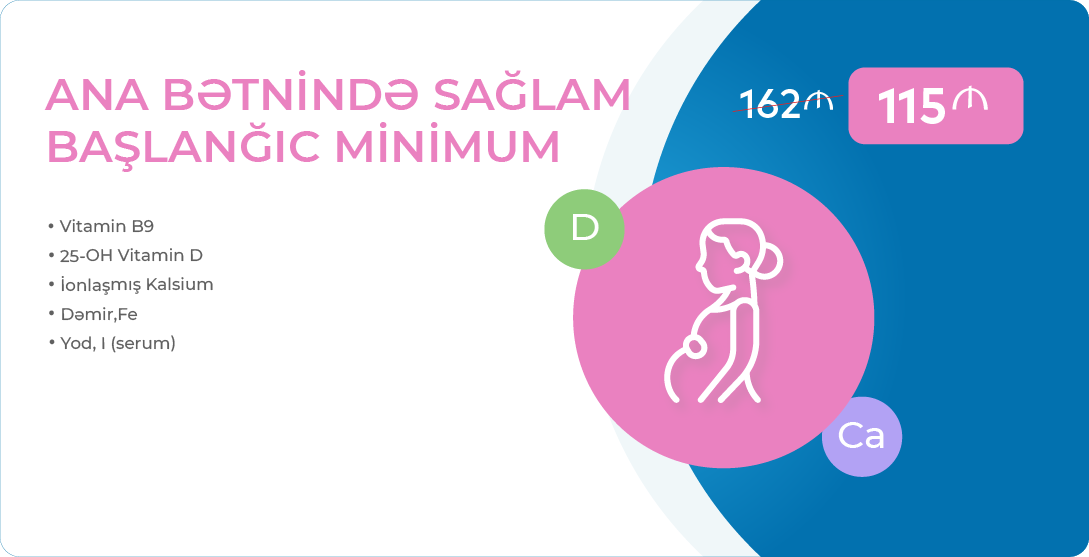
Check-up package to assess essential vitamins and minerals needed for you and your baby during pregnancy.
Why is this check-up package important?
During pregnancy, a woman’s body goes through a period of increased need for essential nutrients. From the moment of conception and especially during the first 12 weeks, maintaining adequate levels of vitamins and minerals is crucial. This supports a healthy pregnancy and helps prevent developmental abnormalities in the baby.
Pregnant women often instinctively aim for a healthier and more varied diet to ensure their baby receives all necessary nutrients. However, vitamin and mineral deficiencies are still common during pregnancy. That’s why comprehensive check-ups are essential-they help identify the most frequent deficiencies during this critical period.
Check-up package includes:
Vitamin D (25-OH): Vitamin D should be maintained at adequate levels throughout pregnancy, especially from the stage of placental formation. This vitamin plays a crucial role in supporting the “mother-placenta-fetus” connection, ensuring proper embryonic development and promoting healthy pregnancy and postpartum outcomes. Research shows that low vitamin D levels can lead to complications such as:
Iodine (I): The fetal organism is more sensitive to iodine deficiency than the mother. Even a short-term deficiency during pregnancy can lead to serious and irreversible consequences. The areas most affected are the child’s intellectual (cognitive) and motor development. Studies show that children born to mothers with even mild iodine deficiency may exhibit signs of delayed psychomotor development. The severity of this delay is directly related to the degree of iodine deficiency.
In more severe cases, iodine deficiency may lead to:
Vitamin B9 (Folic Acid): Deficiency or impaired metabolism of folic acid can lead to the development of the following birth defects:
Studies have shown that insufficient folic acid intake increases the risk of hand and foot developmental abnormalities by four times.
Ionized Calcium (Ca²⁺): Calcium Deficiency:
Calcium is also essential for normal kidney function and the regulation of blood cholesterol levels. Additionally, it plays a crucial role in preventing osteoporosis and tooth decay in the mother.
During pregnancy, functional changes in the endocrine system affect all metabolic processes, including calcium-phosphorus balance and bone metabolism, which increases the risk of calcium deficiency.
Iron: During pregnancy, the need for iron increases significantly, making iron deficiency very common. This can result from higher demand, insufficient dietary intake, or impaired absorption in the intestines. Additionally, inadequate production of erythropoietin (the hormone that stimulates red blood cell formation) can further worsen the condition.
Iron deficiency during pregnancy is associated with several complications, including:
Studies show that the incidence of these complications in cases of iron deficiency ranges from 28% to 40%.
Online registration is mandatoryfor check-up examinations. You can contact the Call Center at (+994 55)4000910 WhatsApp or (012) 910 for more information.